Finding the correct carry ammunition
The first rule in surviving an unlawful attack is to have a firearm that works.
There are a lot of firearm owners that have their firearms locked up for years and fail to do regular maintenance and more important to take it to the shooting range for practice and testing functionality. Imagine pulling your firearm, thus inviting fire, then finding it goes “click” not “bang.”
Handguns don’t work for a variety of reasons. Today we are going to talk about the reliability of handgun pistol ammunition.
It is generally considered a bad idea to carry reloads for self-defence. Partly, that’s because of the habit of prosecutors to characterise it in court as your determination to assemble loads to inflict more damage than necessary. But it is also to avoid the risk of unreliability from poor hand loading methods.
Factory ammunition is also not always perfect. We had a batch of 9mm Parabellum ammunition that entered the South African market that had at least 3 squib loads per box of 50 rounds. There was various rumours as to the quality checks not being done during the manufacturing processes.
Needless to say your life depends on the choices you make and not that is presented in social media and opinions of other.
The most common problems with pistol ammunition can be related to:-
Bullet Crimp
Problems encountered with rimless handgun ammunition is the crimp on the case shoulder that seems to be more a roll crimp than a defined shoulder, or step. A roll crimp destroys the headspace and can jam itself into the chamber throat, locking up the slide.
Chamber Tolerance
Some firearms have a chamber that is slightly tighter than SAAMI minimum specifications, resulting in the factory ammunition, with SAAMI maximum specifications, wedging just before the chamber throat.
Hollow Points
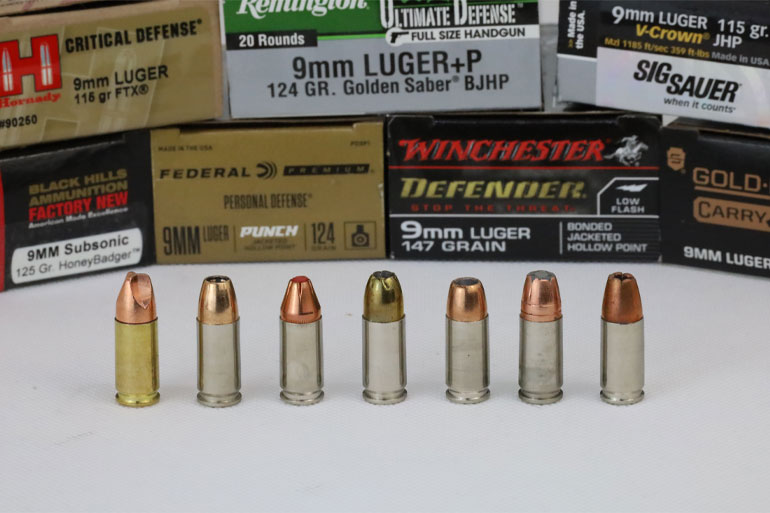
While hollow point ammunition are somewhat less reliable than fully jacketed ammo, they are more reliable than previous designs put into the market during the earlier years. Current firearm designs accept broader ranges of ammunition than others. In short, both firearm and ammo designers identified the most common causes of FTF, failure to feed, and tweaked firearm designs and ammunition designs to eliminate those causes.
Primer sensitivity
Primer failure could be caused by a few things. The primer could be “hard” or the firing pin could not have hit it with enough force.
We tested various brands of ammunition using a Glock 17 with standard factory striker spring. Our findings as far as which primers are harder/softer than others were ranked from softest to hardest. Please note that the tests were done only using factory ammunition. Some factories also use other brands of primers when assembling ammunition under their personal brand name.
- Federal
- Winchester
- S&B
- Fiocchi
- Magtech
- PMC
- Wolf copper (old)
- Remington
- CCI
- PMP
- Wolf nickel (new)
Seems in pretty obvious that Federals are the softest and PMP is among the hardest.
To overcome potential problem with your carry ammunition, you need to find a brand that feeds and fires reliably in your firearm. You may have to try a few different brands.
It isn’t enough to ask what other people use in the same make and model of firearm. Individual firearms have enough manufacturing variation to make that problematic. You have to conduct tests for yourself.
As a rule one will fire at least three magazines filled with your intended carry ammo for personal protection. Doing this will insure proper testing on reliability of feeding, primers sensitivity as well as accuracy.
Guns N’ Roses wishes you the best in finding your personal carry ammunition.
Please contact us on info@gunsnroses.co.za for more information on how we can assist you in finding the correct carry ammunition for your firearm.
Guns ‘N Roses Team